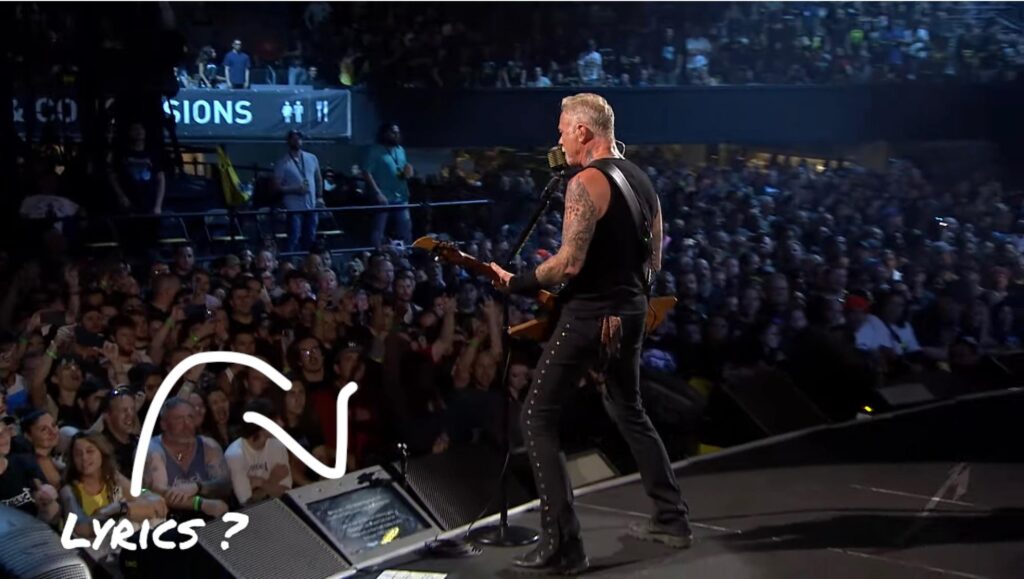
Singers forget lyrics on stage for reasons that have very little to do with preparation.
You know the song.
You have sung it in the shower, in the car, at rehearsal, at the last three gigs. Then you get to the second verse under stage lights, the band is locked in, the crowd is watching, and the words are just… gone. Not slow to arrive. Gone.
If that has happened to you, you are not underprepared and you are not losing your memory. You are running into a mismatch between how you rehearsed and how your brain actually retrieves information under stress. Once you understand that mismatch, the fixes are mechanical, not mystical.

What is actually happening in your brain when the words disappear
Lyric recall is not one skill. It is two separate systems working together: long-term memory, where the words live, and working memory, which pulls them forward one line at a time while you are also managing pitch, breath, timing, and a room full of people looking at you.

Under adrenaline, your body prioritizes threat response over retrieval. Blood flow and attention shift toward the amygdala – the part of your brain scanning for danger – and away from the prefrontal cortex, which is where deliberate recall lives. This is the same reason people forget names at parties or blank on a phone number they use every day. The information hasn’t been deleted. The retrieval pathway has been temporarily deprioritized in favor of “stay alert.”
Rehearsal at home happens in a low-stakes state, so you build a memory that is only tested in a low-stakes state. The first time that memory has to perform under real adrenaline is often the show itself. That is the gap. The fixes below close it.
Fix 1: Stop relying on the "I have sung it 200 times" assumption
Repetition builds familiarity, not retrieval strength under pressure.
Singing along to a track in your car is passive recall – the recording is doing half the work by cueing you a split second ahead. Real rehearsal is retrieval practice: singing the song with no track, no lyric sheet, and ideally a mild stressor, like standing up and performing it to your phone camera. If you have never sung the whole set from memory with zero prompts and someone watching, you have not actually tested whether you know it. You have tested whether you recognize it.
Fix 2: Anchor the first line of every verse, not the whole song
Most memory failures happen at transition points – the first line of verse two, the pickup into the bridge – not in the middle of a phrase you are already singing. That is because the first line of a section has to be retrieved cold, with no momentum carrying you into it. Everything after that first line tends to cascade naturally once you are moving.
So stop rehearsing the song front to back and start drilling entry points specifically. Make a list of every section’s opening line and quiz yourself on those in random order, out of sequence, until you can produce any one of them instantly with no lead-in. That is where the actual failure point lives, and it is the cheapest thing on this list to fix.
Fix 3: Rehearse the transitions, not the choruses
Choruses get rehearsed by accident because you sing them multiple times per song. Transitions – the four bars where you are moving from bridge back to final chorus, or from a spoken intro into verse one – get rehearsed rarely because they only happen once. Under adrenaline, low-repetition material is exactly what drops out first.
Build a practice pass that starts ten seconds before every transition and ends ten seconds after it. Skip the parts you already know cold. This is a shorter, more targeted rehearsal than running the whole song, and it directly strengthens the weakest links instead of re-strengthening what is already strong.
Fix 4: Build a physical cue into the arrangement
Memory is not purely verbal – it is also stored in movement, breath, and sound. Attach a small physical action to a lyric you tend to lose: a specific breath placement, a step toward the mic, a guitarist’s fill you can feel coming. These become retrieval cues that do not rely on the same fragile verbal pathway that adrenaline disrupts.
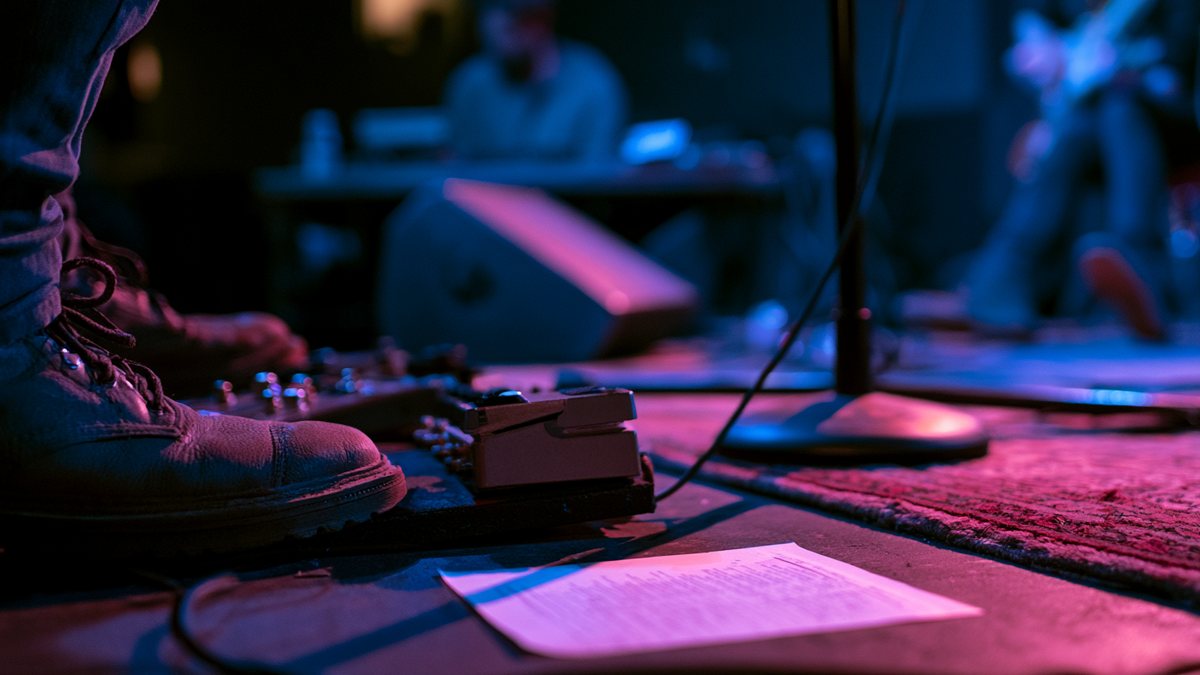
This is why bands that have played together for years rarely blank – the arrangement itself is full of cues. If you are performing solo or with a newer band, you have to build those cues deliberately instead of waiting for them to accumulate over years of gigs.
Fix 5: Reduce cognitive load everywhere else on stage
Working memory is a shared, limited resource. Every bit of attention spent on “am I in tune,” “is my capo on right,” “did the sound guy hear my monitor request” is attention pulled away from lyric retrieval. Singers who blank on stage are frequently not undertrained on the words – they are overloaded on everything else happening simultaneously.

Tighten what you can control before you walk on: know your setlist order cold, confirm gear and levels before the song starts, and simplify blocking on any song where lyrics are shaky. The less bandwidth other tasks eat, the more is left over for recall exactly when you need it.
Fix 6: Put the words where your eyes already are
Even well-rehearsed performers use a visual backup – not because they don’t know the song, but because a glance-able cue keeps retrieval fast under load instead of forcing a full cold-search of memory. The problem with most lyric solutions is that they put the words somewhere your eyes have to leave the performance to find: a phone propped on an amp, a binder on a stand, a screen off to the side that breaks eye contact with the room.
This is the specific problem BLACK BOX Prompter is built to solve. It sits in your natural sightline so the cue is there without looking away from your audience – the words are where your eyes already are, not somewhere you have to hunt for mid-song. That is the difference between a safety net and a distraction. A cue you have to search for adds cognitive load right when you can least afford it. A cue that is already in your field of view removes load instead of adding it.
Fix 7: Have a recovery move you have practiced
Even with all of the above, blanks will still happen occasionally – that is true for professionals with decades on stage, not just newer performers. What separates a forgettable stumble from an invisible one is whether you have a rehearsed recovery move.

Decide in advance what you do when a line disappears: hum the melody and let the band carry you, drop to a scat or ad-lib phrase you have used before, or step back and gesture to the crowd to sing it. Practice this move on purpose, in low-stakes rehearsal, so it is available as muscle memory rather than something you have to invent in the moment. A rehearsed recovery reads as style. An unrehearsed one reads as a mistake.
The uncomfortable truth about willpower and memory under adrenaline
Here is the part most performers don’t want to hear: trying harder does not fix this.
Gripping the mic tighter, telling yourself “just focus,” white-knuckling through a verse – none of it works, because the problem isn’t effort, it’s the biological reality that adrenaline deprioritizes deliberate recall.
You cannot willpower your way past a physiological response.
What actually works is removing the need for perfect cold recall in the first place: rehearsing the way you’ll actually perform, drilling the specific points where memory fails, cutting cognitive load elsewhere, and keeping a low-friction cue in your natural line of sight as backup.
Confidence on stage doesn’t come from hoping you won’t blank out. It comes from knowing that if you do, it won’t show.
See it work before you buy one.