The short answer - yes, and far more than you think
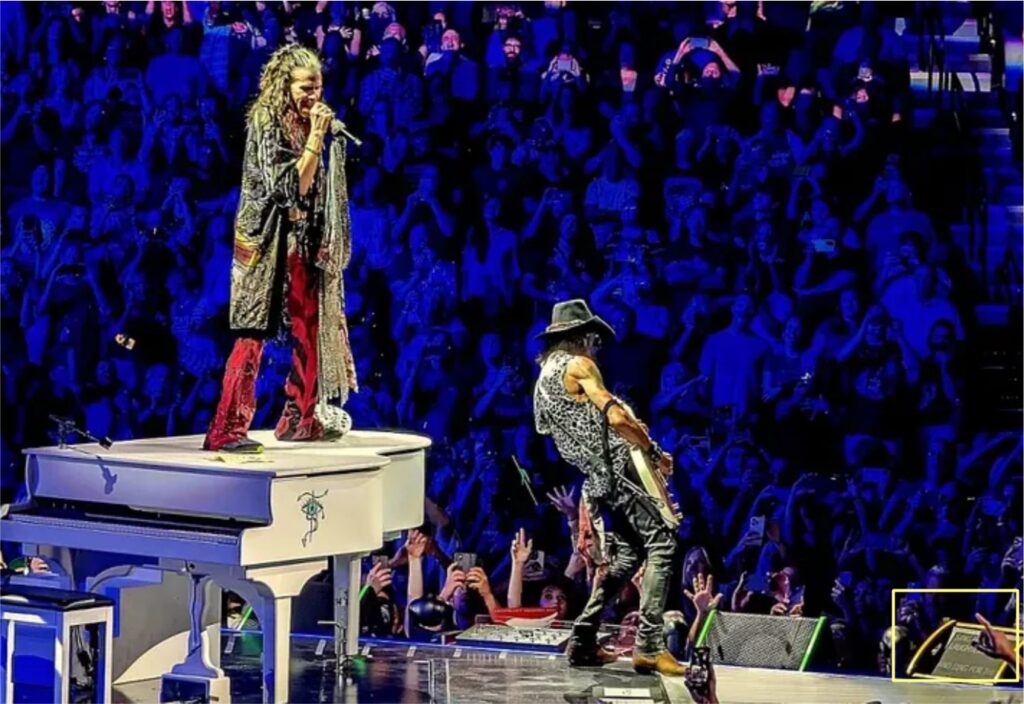
Ask around and you’ll get the same reflexive answer: “real musicians don’t need a teleprompter.” Then look at what’s actually happening on the world’s biggest stages, and the story falls apart fast – teleprompters for singers are standard equipment at the top of the industry, not a workaround for someone who forgot their own lyrics.
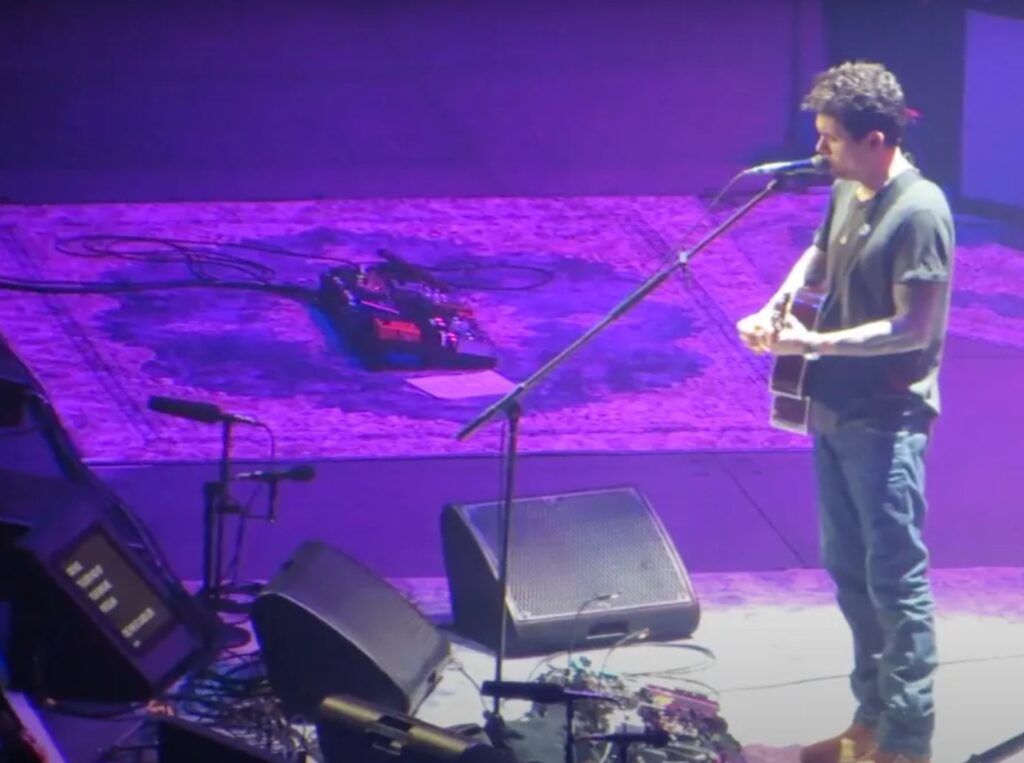
Mariah Carey tours with one. John Mayer has used prompters on stadium runs. Diana Ross, John Legend, and a long list of arena and stadium headliners have had a screen at the lip of the stage for years.
Broadway pit conductors, awards-show performers, and session vocalists cutting a track in three takes all lean on the same tool. If you want the receipts, we put together 50 Rock Stars Who Rely On Teleprompters – and the list is longer, and more surprising, than most musicians expect.
The instinct to hide it comes from a good place. Nobody wants to look like they don’t know their own material. But the actual data point is the opposite of what people assume: the more shows an artist has played, the more likely they are to have a teleprompter for singers written into their rider. That’s not a coincidence, and it’s not because touring pros are worse at memorizing lyrics than a bar-band singer doing three songs a night. It’s because the job changes at scale, and the tool changes with it.
Why the biggest touring acts adopted them first
Teleprompters didn’t start in music.
They came from broadcast news and political speechwriting – environments where the cost of a mistake is enormous and the content changes constantly. Touring acts adopted the same tool for almost identical reasons, and today teleprompters for singers show up on riders across every genre, from pop residencies to country arena tours.
Think about what a stadium tour actually demands.
A headliner might carry twenty-five to thirty-five songs in rotation across a run, swap the setlist nightly based on the city, insert a cover for a hometown crowd, rework a bridge for a live arrangement that’s different from the studio version, and do all of this while wearing an in-ear pack, hitting blocking marks, working a thrust stage, and managing a live band or click track. Multiply that by 80 to 150 shows a year, sometimes for a decade or more.
Under those conditions, a teleprompter isn’t a crutch. It’s risk management. It’s the same reason airline pilots run through checklists they’ve completed a thousand times, and the same reason presidents read from prompters even when they wrote the speech themselves. High-stakes, high-repetition performance environments converge on the same solution: remove the parts of the job that don’t need to be held in working memory, so the brain has bandwidth for the parts that do.
The biggest acts got there first simply because they hit that threshold first. Once a tour reaches a certain size – more songs, more markets, more production complexity – the math stops favoring pure memorization. Everyone downstream is just catching up to what stadium acts figured out decades ago.
What a prompter is actually doing for a professional (hint - it is not memory)
This is the part that trips people up. They assume a prompter exists because the singer forgot the words. For a professional, that’s almost never the real function.
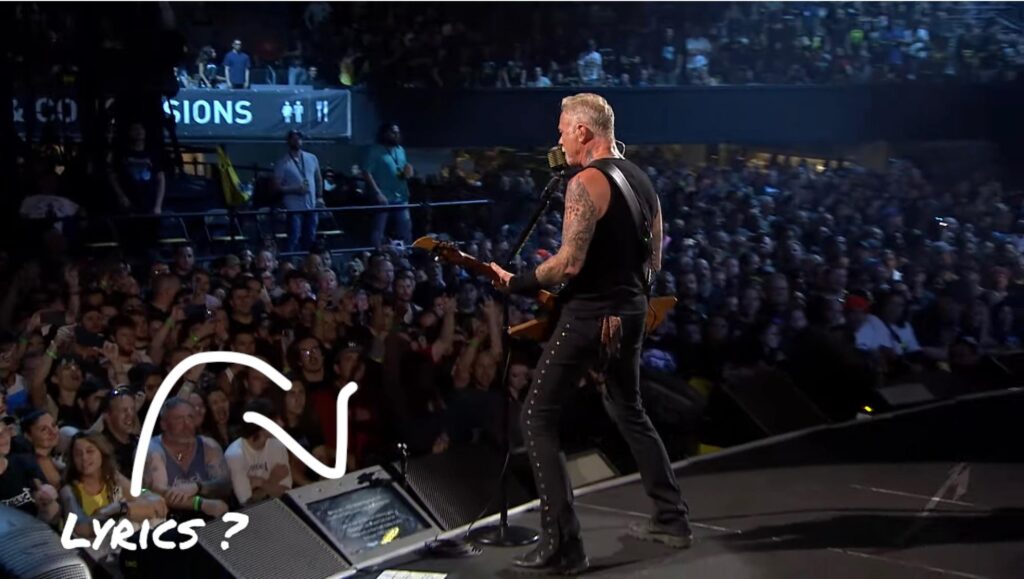
In practical terms, a teleprompter for singers is a screen positioned near the stage edge or monitor line that displays lyrics, arrangement cues, and blocking notes in real time – something to glance at, not read from.
A working musician typically has the lyrics themselves cold. What they don’t have banked with the same certainty is everything layered on top: the exact phrasing choice for tonight’s arrangement, the ad-libbed bridge that changed after rehearsal, the key change for a guest vocalist, the cue for when the band drops out, the reminder to hit a mark before the light cue fires.
A prompter isn’t feeding someone their own song. It’s holding the working memory overhead so the performer’s brain is free for the things that can’t be scripted – tone, phrasing, eye contact, reading the room, reacting to the band in real time.
There’s a useful analogy in cognitive load theory: humans have a limited amount of working memory available at any moment, and every task competes for the same pool. A performer who has to actively retrieve “what’s the next line” is spending cognitive resources that could otherwise go toward performing that line well. Free up the retrieval task, and what’s left over goes straight into delivery.
That’s also why prompters show up more, not less, as an artist’s career gets more demanding. It’s not a beginner’s tool. It’s a tool for people whose job has gotten complicated enough that offloading the trivial stuff has real value.
The difference between reading a song and being freed to perform it
Here’s where the stigma really falls apart under scrutiny, because “reading” and “being freed to perform” look like opposites but they’re actually describing the same tool used two different ways.
A performer who is reading is staring at the screen, tracking left to right, disconnected from the room. That’s a real failure mode, and it’s what people picture when they hear “teleprompter.” But that failure mode has almost nothing to do with the device and everything to do with how it’s used. A screen positioned wrong, text sized wrong, or a performer who genuinely doesn’t know the material and is using the prompter as a substitute for preparation – that’s what produces the flat, glassy-eyed reading performance.
Used correctly, a prompter functions more like a net under a trapeze act. The performer isn’t looking down at it constantly. It’s there, in peripheral vision, confirmed with a glance every so often, present specifically so that if something goes sideways – nerves, a monitor mix that drops out, a bandmate who skips a section – there’s an immediate recovery point instead of a visible spiral. The performer spends the show looking at the crowd, not the screen, precisely because they trust the screen is there if they need it.
That’s the real distinction: a bad prompter setup creates dependency. A good one creates confidence. And confidence is what actually reads to an audience as command of the material – which is the exact opposite of what the stigma predicts.
What audiences actually notice (and what they do not)
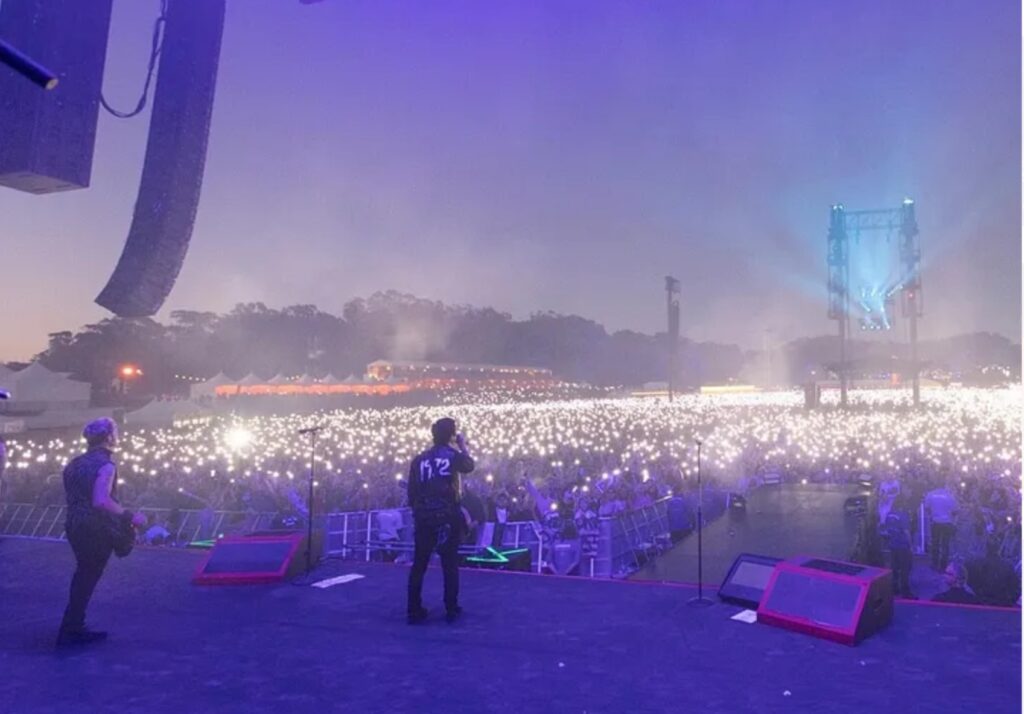
Audiences do not, in any consistent or documented way, notice a well-placed, well-used teleprompter. They notice eye contact. They notice energy. They notice whether the performer seems present or seems like they’re somewhere else mentally. They notice vocal tone, stage movement, and whether the band is locked in. A confidence monitor sitting at the edge of the stage, angled correctly, simply isn’t on the list of things a paying crowd is scanning for.
What they do notice, immediately and viscerally, is a performer who looks lost. A missed lyric that turns into a visible panic. A dead pause while someone tries to remember which verse comes next. A song that falls apart because nobody could recover the thread. Those moments get clipped, posted, and remembered – not because the artist didn’t use a prompter, but because nothing was there to catch the mistake.
This is the actual trade a prompter offers: it trades a small, theoretical risk (someone in row three notices a screen) for protection against a large, real risk (a public, memorable failure). Professionals who’ve been burned once by a blown lyric in front of twenty thousand people tend to make that trade very quickly and never look back.
The one thing that does look amateur - and it is not the prompter
If there’s a genuine tell for an unpolished live act, it’s not the presence of a teleprompter for singers. It’s poor stagecraft around it – and specifically, disconnection from the audience.
A performer who never looks up. Someone who plants themselves in one spot because that’s the only place the screen is visible. A band that feels like it’s performing for the monitor wedge instead of the room. Those are the actual amateur signals, and none of them require a teleprompter to exist – they show up just as often with a lyric sheet taped to the floor, a phone propped on an amp, or someone visibly relying on a bandmate to mouth the next line.
The prompter isn’t the variable that separates a polished show from a rough one. Preparation, positioning, and how the tool is integrated into the performance are the variables. A well-placed screen at eye level near the crowd’s sightline lets a performer glance and return to the audience in under a second. A phone on a mic stand, a laptop off to the side, or a lyric sheet on a music stand forces the performer to break posture and look down and away – which is far more visible and far more disruptive than any confidence monitor.
In other words: the tool was never the problem. Bad integration of any memory aid is the problem, and a purpose-built prompter is specifically designed to solve that integration issue better than the workarounds most bands default to.
How to introduce one into your band without a fight
The resistance almost never comes from logic – it comes from identity. Suggesting a teleprompter for singers can land as “you think I don’t know the songs,” even when that’s not remotely the point. A few things make the conversation land better.
Lead with the framing that’s actually true: this isn’t about memory, it’s about bandwidth. Every band member already outsources something – the setlist taped to the floor, the chart on a stand, the click track in the drummer’s ear. A teleprompter is the same category of tool, just built for the specific job of holding lyrics, cues, and structure so the singer’s attention goes to performance instead of recall.
Start with the highest-leverage use case, not a wholesale change. New material, guest sit-ins, one-off cover requests, or a wedding and corporate gig with an unfamiliar set list are all low-ego entry points – nobody feels judged using a prompter for a song they learned last week. Once the band sees it doesn’t change how the show sounds or looks, resistance to using it more broadly tends to fade on its own.
And make the case with what the pros actually do, not with argument.
Pointing to acts on 50 Rock Stars Who Rely On Teleprompters does more work than any pitch about cognitive load – it reframes the tool from “beginner crutch” to “what people do once the stakes get real.”
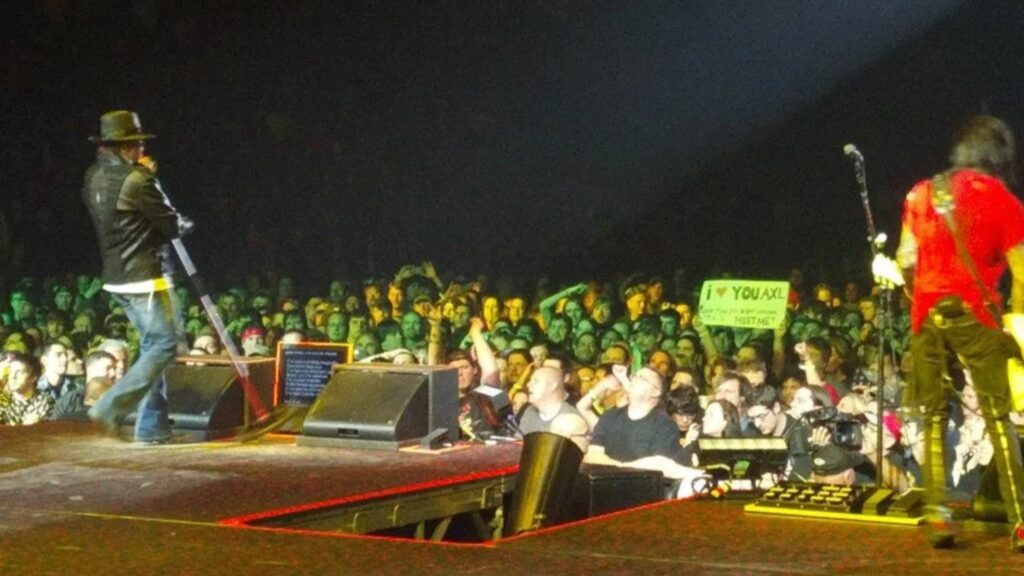
The best way to settle the argument, though, is to just show the band how a teleprompter for singers actually works on stage – screen placement, readability, how little it changes the performance.