Why You Keep Staring at Your Tablet on Stage
You’re mid-performance. The song is flowing.
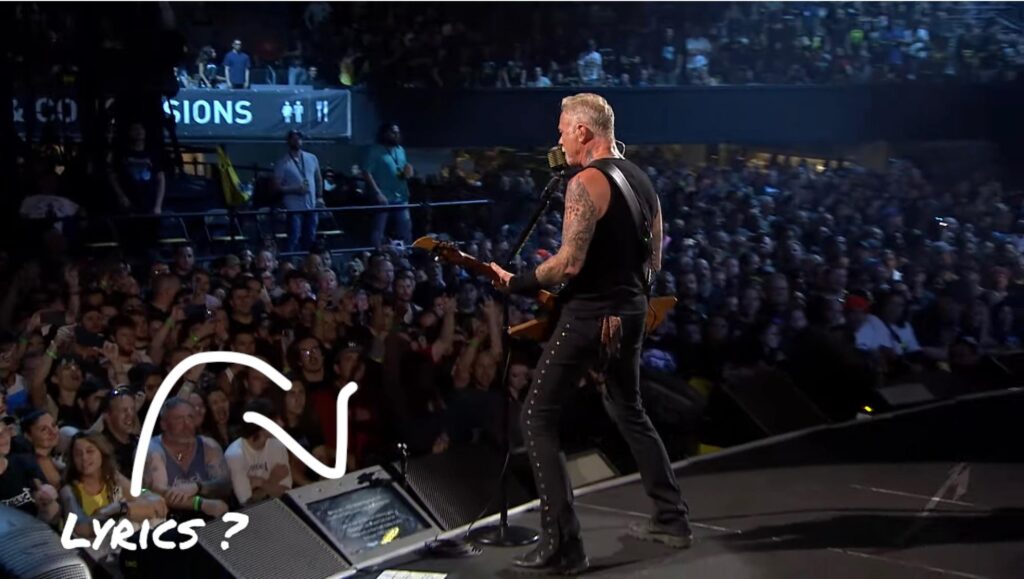
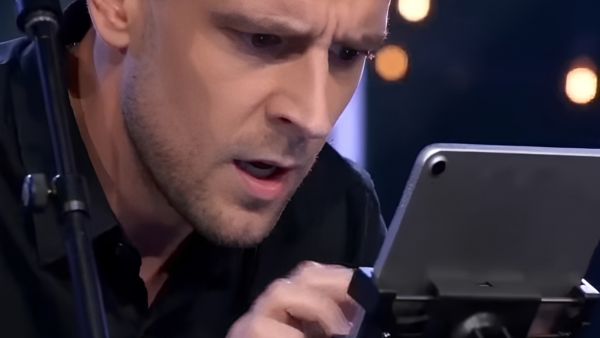
Then your eyes drift down to that glowing rectangle in your hands. It’s automatic. Your brain wants the safety net of those lyrics right there, visible and accessible. But the moment you stop staring at tablet on stage, you’ve lost the audience.
This is the core problem performers face. You need the lyrics. But staring at a tablet kills your stage presence. It breaks the connection with your audience. Your energy drops. The performance feels less authentic.
At BLACK BOX Prompter, we’ve worked with hundreds of musicians and worship leaders who struggled with this exact issue.
The pattern is always the same: performers know they shouldn’t stare at their device, but they do it anyway because the alternative feels risky. What if they forget a line? What if they miss a cue?
The real issue isn’t that you’re weak or unprepared.
It’s that you’re using the wrong tool for the job. A tablet is designed for personal use. It’s not designed for stage performance. When you try to use it as a lyrics prompter, you’re fighting against its basic design.
Your eyes naturally want to focus on it.
Your hands want to hold it.
Your anxiety pushes you to check it constantly.
Understanding why this happens is the first step to fixing it. Once you see the pattern clearly, you can address it directly.
The Impact of Screen Dependency on Your Performance
When you stop staring at tablet on stage, three things happen immediately. First, your body language changes. You hunch forward slightly. Your shoulders curve inward. Your posture becomes defensive instead of confident. The audience sees this shift instantly, even if they can’t name it.
Second, your eye contact breaks. Eye contact is where connection happens.
It’s how you transmit emotion to the audience. When your eyes are on the screen, you’re not transmitting anything. You’re receiving. You’re taking information instead of giving energy.
Third, your cognitive load spikes. Part of your brain is tracking the lyrics on the screen. Another part is managing your physical performance. A third part is trying to maintain stage presence. You’re splitting your attention three ways, which means you’re doing none of them well.
The cumulative effect is real. Performers who rely heavily on tablets report feeling more anxious on stage. They feel less connected to their audience. They feel like they’re performing at 70% instead of 100%. That gap between good and great is where stage presence lives.
Digital eye strain adds another layer. Stage lighting is bright. Screens emit blue light. Your eyes work harder to focus on the small text. By the end of a set, your eyes are fatigued. This physical fatigue translates into mental fatigue, which affects your performance quality.
The solution isn’t to memorize everything. That’s unrealistic for most performers, especially those with large setlists or complex arrangements. The solution is to change how you access the information you need.
24″ Wedge Teleprompter for Musicians →
How to Memorize Lyrics for Live Performance
Memorization doesn’t have to mean perfect word-for-word recall. Most successful performers use a hybrid approach. They memorize the structure and key lyrics, then use a prompter for the rest.
Start by learning the song’s structure. Understand the verse, chorus, bridge, and pre-chorus. Know where the transitions happen. This gives your brain a framework to hang lyrics on.
Next, focus on the chorus. The chorus is repeated multiple times, so it’s easier to memorize. It’s also what the audience knows best. Getting the chorus right builds confidence.
For verses, learn the first line and the last line. These are anchor points. Once you have the anchors, the middle lines often come naturally.
Sing the song repeatedly. Not in your head, but out loud. Your voice and ears lock in the melody and lyrics much faster than silent reading. Sing it while driving. Sing it while doing dishes. Sing it while walking. The repetition builds muscle memory.
Record yourself singing it. Listen back. You’ll immediately hear where you’re uncertain. Those uncertain spots are where you need extra practice.
Use a lyrics prompter as a safety net, not a crutch. Have the lyrics available, but challenge yourself to sing without looking. Look down only when you genuinely blank on a line. Over time, you’ll need to look less and less.
The goal isn’t perfect memorization. The goal is confidence. When you know you have the lyrics available if you need them, your anxiety drops. When your anxiety drops, you perform better. When you perform better, you naturally look at the prompter less. This shift in focus from the screen to the audience creates a sense of ease that is essential for looking natural on camera.
A Smarter Alternative to Tablets on Stage

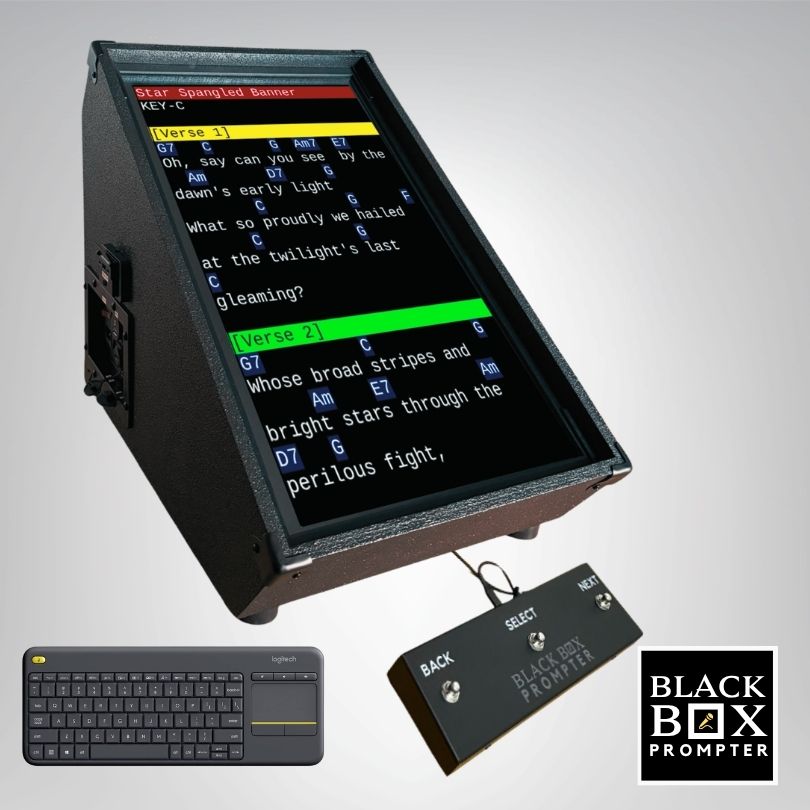
A proper lyrics prompter changes everything. Unlike a tablet, which is designed for personal use, a teleprompter for musicians is designed specifically for stage performance.
The key difference is visibility. A tablet is visible to the audience. A proper prompter displays lyrics in a way that only you can see. This eliminates the distraction entirely. You’re not checking a device. You’re glancing at a monitor positioned at your eye level.
BLACK BOX Prompter is purpose-built for this exact use case. It includes the software you need to display lyrics and chords. It supports standard file formats like .txt and .pdf. You can import your setlists and transpose songs on the fly.
Want to see it in action? Get a free demo today.
Questions We Get Often Regarding Tablets & Teleprompters
Why do I keep staring at my tablet when I perform on stage?
Staring at your tablet happens because your brain is managing multiple cognitive loads at once: remembering lyrics, tracking your place in the setlist, monitoring backing tracks, and reading chord charts. Your eyes naturally drift to the screen as a safety net when anxiety spikes. Screen dependency develops quickly, your brain learns that the tablet reduces uncertainty, so it keeps checking it, even when you don’t consciously need to. Breaking this habit requires replacing the tablet with a system that eliminates the glance altogether, like a lyrics prompter designed specifically for musicians.
How can a teleprompter for musicians help me stop looking at my tablet?
BLACK BOX Prompter keeps your lyrics and chords hidden from the audience while displaying them at eye level or below your sight line. Unlike a tablet you hold or place on a music stand, the discreet prompter is positioned so you can glance at it naturally without the audience noticing. The prompter also includes foot pedal control and auto-scroll features, so your hands stay free for your instrument and your eyes stay on the crowd. This removes the anxiety of losing your place, which eliminates the root cause of constant screen checking.
Can I memorize my setlist well enough to never need lyrics on stage?
Most performers can memorize 3-5 songs reliably, but full setlists of 15-20 songs are harder to hold without cues. Even professional musicians use visual references, they just hide them. Memorization works best when combined with muscle memory and confidence cues. The goal isn’t to memorize everything perfectly; it’s to know your material well enough that you only need a quick glance to confirm your place or catch a lyric you blanked on. This hybrid approach, solid memorization plus discreet lyric access, gives you the freedom to focus on your audience and your performance rather than fighting your memory.
What’s the fastest way to reduce my anxiety about forgetting lyrics during a live performance?
Anxiety about forgetting lyrics stems from uncertainty. The fastest relief comes from removing that uncertainty through preparation and a reliable backup system. Practice your songs until you can sing them without thinking, then add a lyrics prompter so you know you have a safety net if your mind blanks. This combination, muscle memory plus hidden lyric access, eliminates the ‘what if I forget’ worry that triggers constant screen checking. Knowing your lyrics are there, hidden from view, lets your brain relax and focus on connecting with your audience instead of managing fear.